
Office Cleaning During Cold and Flu Season: What to Add to Your Scope
Published · By Empire FL Professional Cleaning
Fall changes how a Central Florida office is used. Summer vacations are over, meetings are back on the calendar, and break rooms, restrooms, and conference rooms are busier than they were in July. It is also the start of cold and flu season. The CDC notes (opens in a new tab) that flu season in the United States usually runs through the fall and winter, and other respiratory viruses circulate at the same time.
That makes October a practical time to review your office cleaning scope before the busiest months of the season. This guide is not about how many visits you need. That question is covered in our guide to how often an office should be cleaned. Instead, it focuses on tasks: the surfaces, rooms, and supplies worth naming in writing for office cleaning in flu season, and when disinfection should be specified separately.
Cleaning, sanitizing, and disinfecting are not the same
These words are often used interchangeably, but they describe different steps. In its guidance on when and how to clean and disinfect a facility (opens in a new tab), the CDC describes them this way:
- Cleaning with soap or detergent removes dirt and most germs from surfaces.
- Sanitizing reduces the germs that remain on surfaces after cleaning.
- Disinfecting uses products that can kill germs that remain on surfaces after cleaning.
The order matters. Surfaces should be cleaned before they are sanitized or disinfected, because dirt can make those products less effective. For a commercial cleaning agreement, the practical point is simple: routine cleaning and disinfection are separate tasks. If you want a surface disinfected, the scope should say which surfaces, how often, and with what kind of product. Our commercial cleaning checklist makes the same recommendation: any requested disinfection should be specified separately from general cleaning.
High-touch surfaces to name in your scope
Most office cleaning plans cover trash, dusting, floors, and restrooms. During cold and flu season, many office managers also want the frequently touched points in the building listed by name, so nobody has to guess whether they are included. Common examples:
- Door handles, push plates, and lever handles on main and interior doors
- Light switches, elevator buttons, and stair rails
- Reception counters, check-in areas, and shared pens
- Conference room tables, chair arms, and shared remotes
- Break room appliance handles, faucet handles, and coffee station surfaces
- Copier and printer touch panels, and water bottle filler buttons
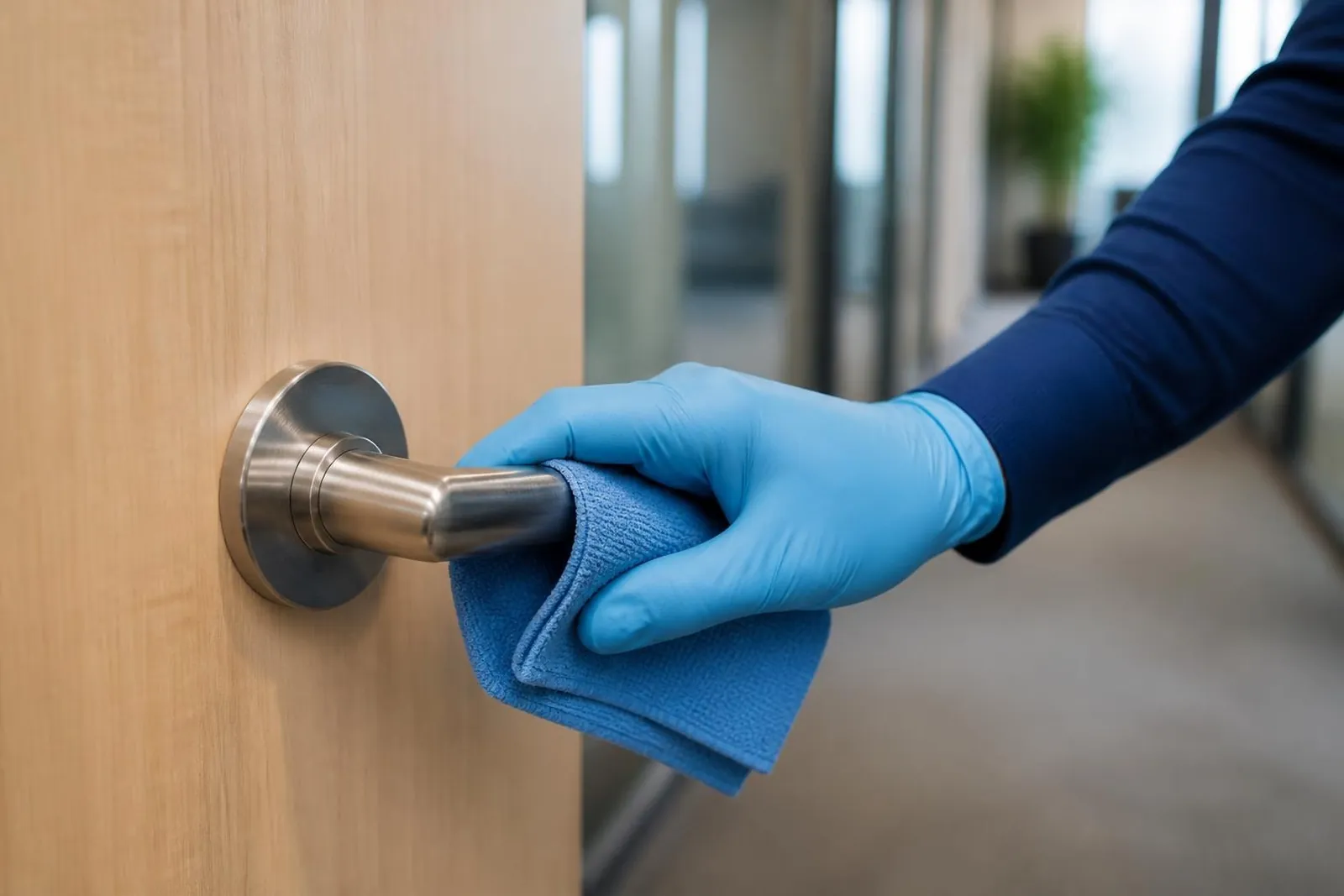
Listing these points does two things. It gives the cleaning crew a clear route through the building, and it gives you a simple way to check the work after a visit.
Shared equipment and personal desks
Be specific about electronics and personal workspaces. Some offices want keyboards, phones, and desk surfaces wiped on every visit. Others prefer that the crew not touch desks, paperwork, or equipment at all. Both are reasonable choices, but they should be written down. For electronics, cleaning should follow the manufacturer's instructions. If employees clean their own devices, decide who provides the wipes.
Restrooms and break rooms need more than a quick wipe
Restrooms
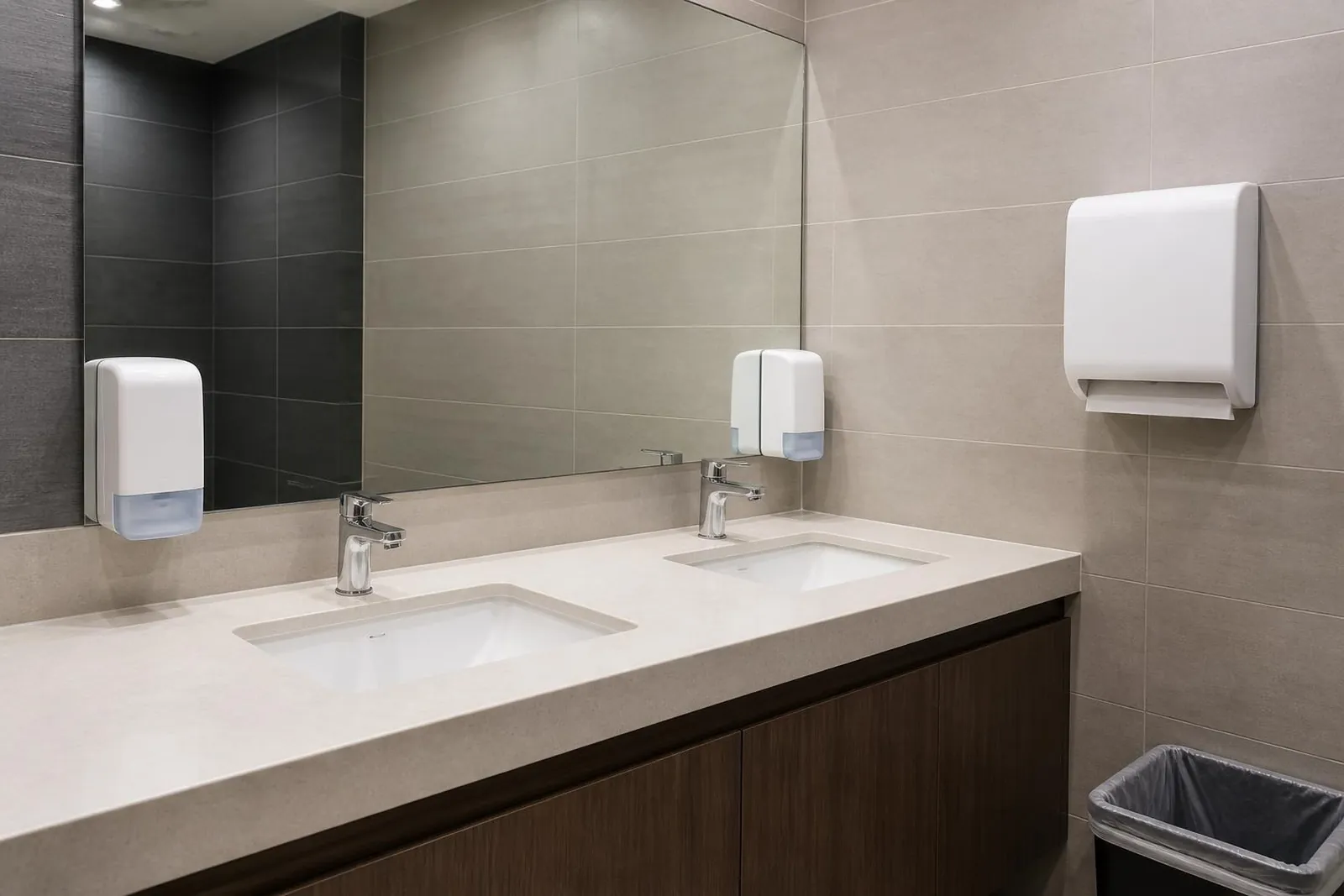
Restrooms usually get attention on every visit, but the details are what make the difference. Name the fixtures, sinks, counters, mirrors, floors, flush handles, stall latches, faucet handles, and dispenser surfaces. Decide how waste containers are handled and when liners are replaced. If grout lines in a busy restroom stay dark even after regular mopping, periodic tile and grout cleaning can be scheduled as a separate service.
Break rooms
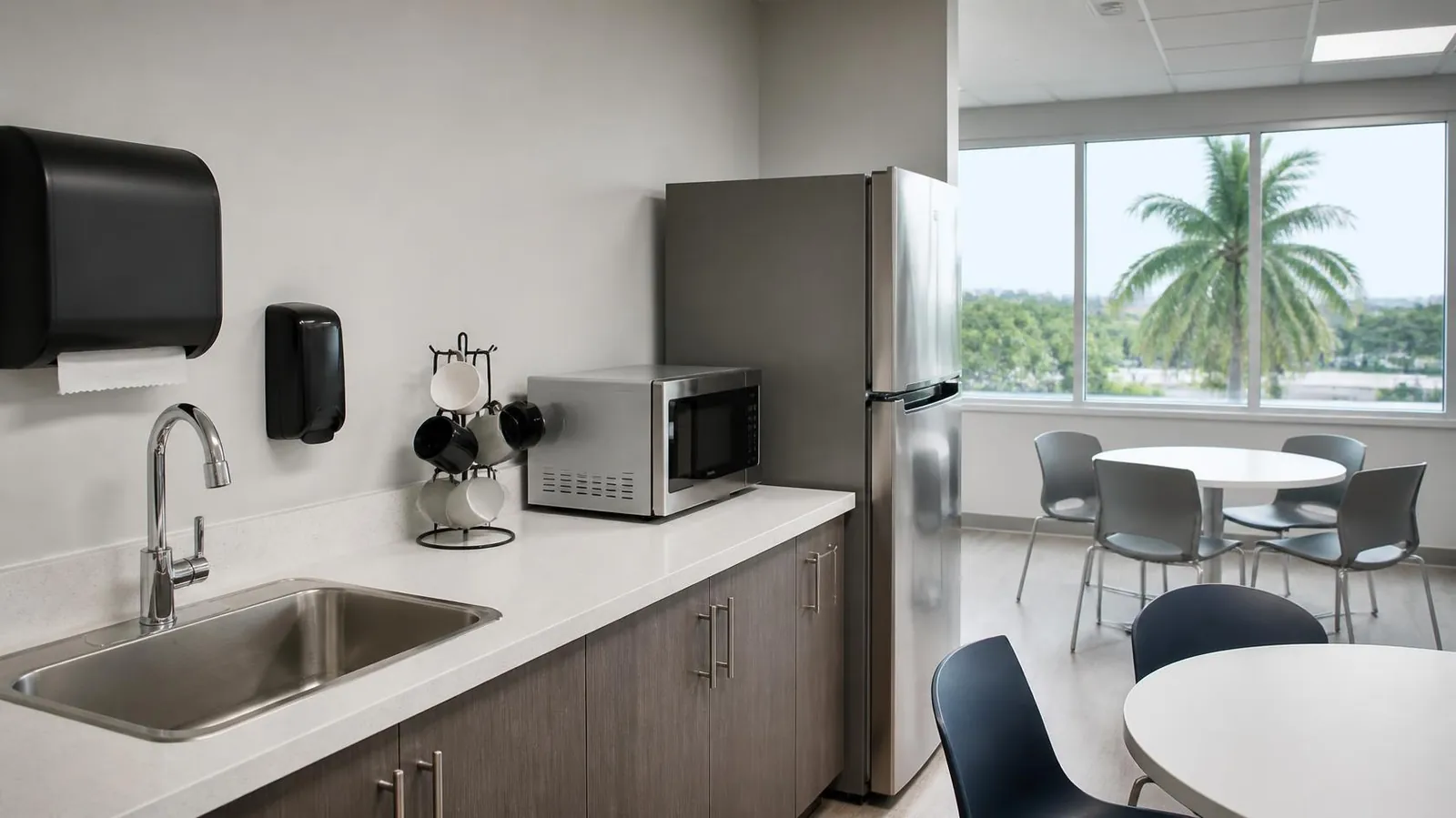
The break room is often the busiest shared space in an office. Spell out the counters, sinks, tables, chairs, and appliance exteriors. Then decide what is not included unless you request it: cleaning inside microwaves and refrigerators, washing dishes, and throwing out food left behind. These tasks take time, and leaving them unstated is one of the most common sources of mismatched expectations.
Supplies and restocking: settle it in writing
An empty soap dispenser or paper towel holder is one of the first things employees and visitors notice. Before the season gets busy, confirm:
- Who purchases soap, paper towels, toilet tissue, and trash liners
- Who refills dispensers, and on which visits
- Whether hand sanitizer stations are part of the cleaning scope or handled by your staff
- Where backup supplies are stored and who reorders them
- Who handles a dispenser that runs out between visits
None of these questions is complicated, but each one needs an owner. If you are weighing who should do this work in the first place, our comparison of an in-house cleaning team and a commercial cleaning company covers supplies, coverage, and supervision.
When to add disinfection to the scope
Some offices are comfortable with routine cleaning alone. Others want disinfection added for selected surfaces during the fall and winter, or on request after someone has been ill at work. The CDC's facility guidance says routine cleaning is enough in most situations, and it recommends disinfecting surfaces where people have obviously been ill.
If you decide to add disinfection, write it into the agreement with enough detail to be useful:
- Which surfaces, such as restroom fixtures, break room counters, or door hardware
- How often, whether every visit, weekly, or only on request
- What kind of product, typically an EPA-registered disinfectant used according to its label directions. The EPA's page on selected EPA-registered disinfectants (opens in a new tab) explains how to read a disinfectant label and links to product lists for common pathogens.
- Surface compatibility, because some finishes and electronics need different products
- Who supplies the product, and how event-based requests are made and scheduled
Empire offers disinfection and can talk it through during the on-site visit, so the written proposal states exactly what is included and what is quoted separately.
Cleaning is one part of keeping a workplace in good order. It does not replace the health guidance your organization already follows.
Fit the scope to how your office actually runs
There is no single flu season scope. A multi-tenant building in downtown Orlando with shared lobbies and elevators has different priorities than a small professional office in Winter Park or Maitland. A growing team in Winter Garden may need more break room attention than a quiet suite with only a few people on site.
The same thinking applies to other facilities. A dealership customer lounge and service desk in Kissimmee, a church lobby and nursery in Windermere, and a school front office in Clermont all have their own touch points that can be added to the scope.
Seasonal changes do not have to be permanent. Scope changes can be discussed, and any effect on scheduling and pricing should be confirmed before the additional work begins. Our guide to how commercial cleaning pricing works in Central Florida explains how scope and frequency shape a quote.
A quick flu season scope checklist
Use this list as a starting point when you review your commercial cleaning scope:
- High-touch points listed by name, room by room
- Clear rules for desks, paperwork, and electronics
- Restroom tasks, dispenser surfaces, and liner changes spelled out
- Break room tasks included, plus what needs a special request
- An owner for every supply: who buys, who refills, who reorders
- Disinfection specified separately, if you want it: surfaces, frequency, product
- A plan for requests between visits
- A date to review the scope again at the end of the season
Prepare for your site visit
Before you meet with a cleaning provider, note your typical headcount, your busiest days, the rooms people share most, the equipment the crew should or should not touch, and how supplies are handled today. If you are comparing providers, our guide to choosing a commercial cleaning company in Central Florida lists the questions worth asking.
If your entrances and walkways also need attention after the summer, you can plan both at once. Our guide to commercial pressure washing after the rainy season covers the exterior side.
Request a free site visit, and we will walk through your office with you, confirm the tasks that matter most this season, and prepare a written quote.
Frequently asked questions
- Should our office cleaning scope change during flu season?
- It can. Many offices review their scope in the fall to list high-touch surfaces, confirm restroom and break room tasks, and settle who handles supplies. The right changes depend on how your office is used.
- What is the difference between cleaning and disinfecting?
- Cleaning removes dirt and most germs from surfaces. Disinfecting uses products that can kill germs that remain after cleaning. Surfaces should be cleaned before they are disinfected.
- Is disinfection included in routine office cleaning?
- Not automatically. Disinfection should be specified separately in the agreement, including which surfaces, how often, and what kind of product will be used.
- Who supplies soap, paper towels, and other restroom supplies?
- It depends on your contract. Supplies such as soap, paper products, and liners can be included in the service according to what is agreed in the contract; they are not included by default. Confirm who purchases and restocks them, and who handles a dispenser that runs out between visits.
- Can we add tasks just for the fall and winter months?
- Yes, scope changes can be discussed. Confirm any effect on scheduling and pricing before the additional work begins, and set a date to review the scope again.
Let’s discuss your commercial cleaning needs
Tell us about your facility and cleaning needs. We'll contact you to arrange a complimentary on-site visit before preparing your quote.