

How Often Should Commercial Carpets Be Deep Cleaned?
Published · By Empire FL Professional Cleaning
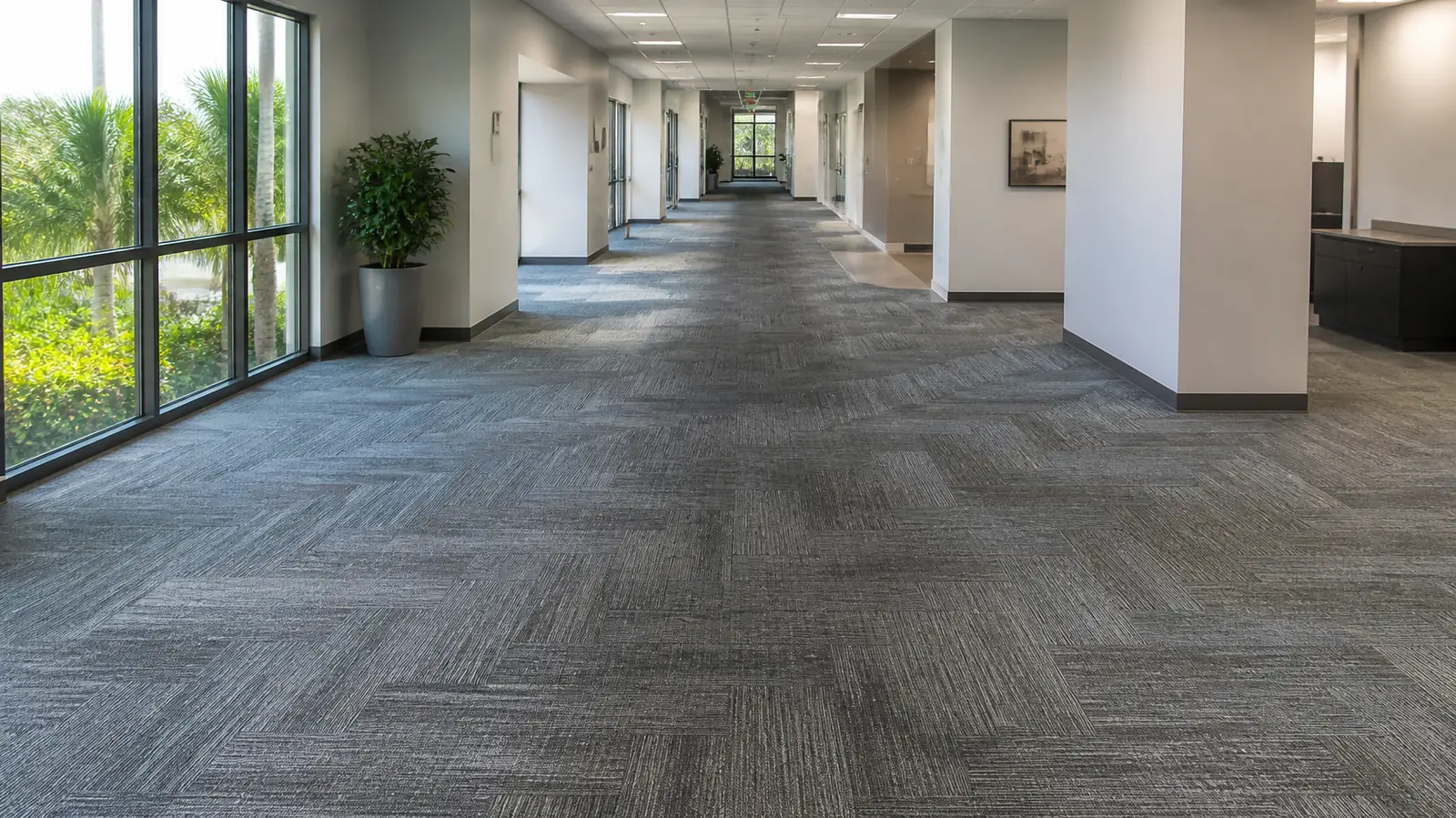
A clear carpet care schedule helps Central Florida churches, schools and offices keep sanctuaries, classrooms and lobbies looking cared for through the holiday season, instead of waiting until the traffic lanes turn gray. The honest answer to "how often" is that it depends on traffic. The plan behind that answer is simple: vacuum often, treat spots early, and schedule commercial carpet cleaning with hot-water extraction on a cycle that matches how each room is used.
This guide is only about carpet. If you are planning how many cleaning visits your building needs overall, start with our post on how often an office should be professionally cleaned. Here we look at what vacuuming can and cannot do, why traffic lanes appear, how to handle spots, and why Florida's climate affects timing.
Vacuuming vs. deep cleaning: two different jobs
Routine vacuuming and deep cleaning do not replace each other. They remove different kinds of soil.
- Vacuuming picks up loose, dry soil from the surface before foot traffic grinds it into the pile. It belongs in the recurring cleaning scope.
- Deep cleaning targets the embedded soil, residue and traffic lanes a vacuum leaves behind. It is periodic work, scheduled on a cycle.
The Carpet and Rug Institute's cleaning and maintenance guidance for businesses (opens in a new tab) suggests vacuuming daily in high-traffic areas, twice weekly in medium-traffic areas and weekly in light-traffic areas. That vacuuming rhythm is the foundation. Deep cleaning works best on carpet that has been maintained between visits, not as a rescue after months of buildup.
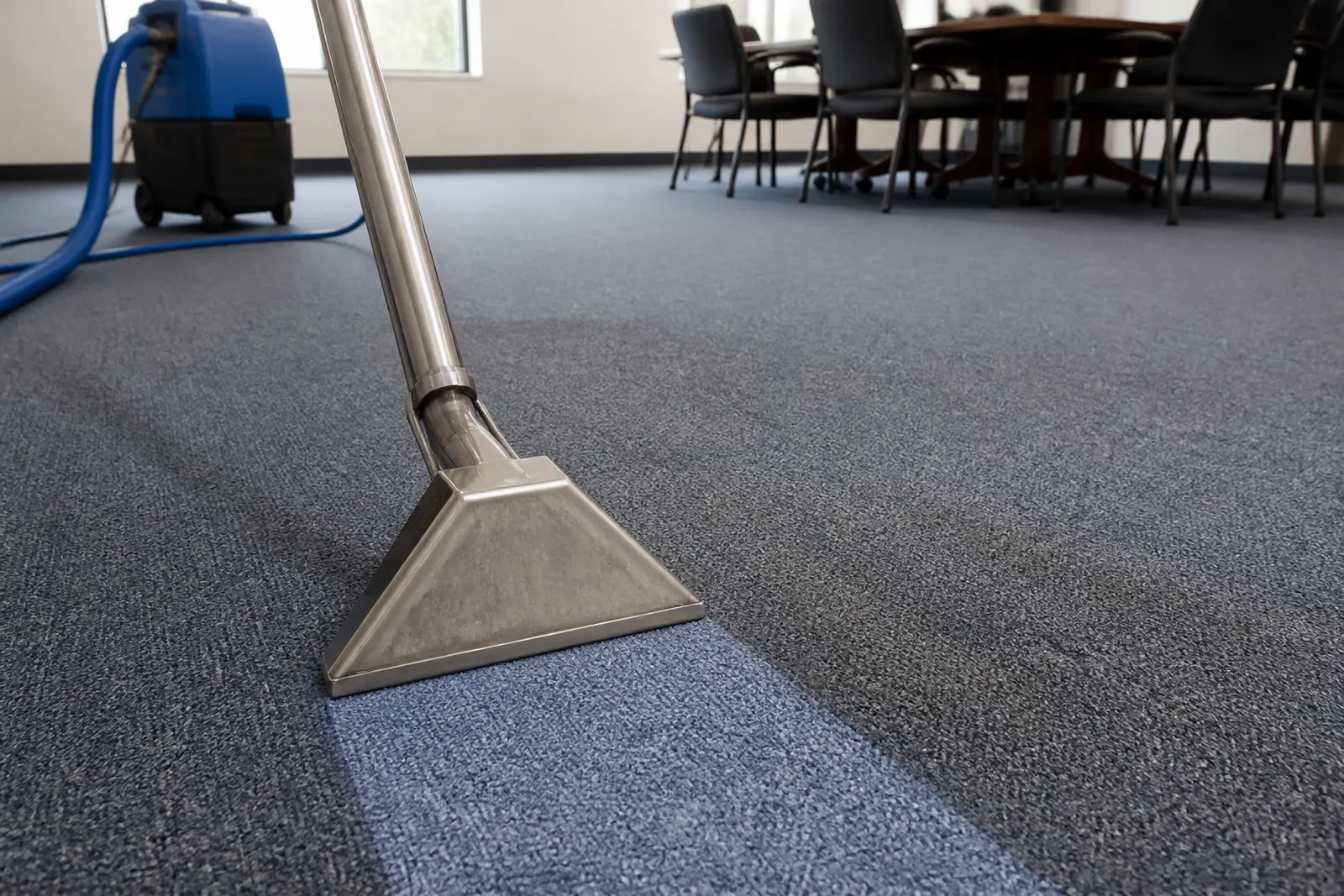
For deep cleaning, our commercial carpet cleaning service uses hot-water extraction. The process starts with a pre-inspection of fibers, stains and high-traffic areas, then pre-treatment to loosen embedded soil and spots. After the extraction itself come targeted spot and traffic-lane treatment, deodorizing, and grooming with an airflow setup to help the carpet dry.
How often to clean office carpet and other commercial carpet
No single number fits every building. As a general starting point, high-traffic offices often plan a professional deep clean every 6 to 12 months, with spot treatment in between. From there, adjust the schedule area by area.
High-traffic areas
Entrances, lobbies, main hallways, church foyers, school corridors, and the path from a dealership's service desk to its customer lounge take the most foot traffic. These are usually the first places to show wear. They may need extraction more often than the rest of the building, sometimes on their own schedule.
Medium-traffic areas
Conference rooms, classrooms, open office areas and fellowship halls see steady use, but not constant traffic. They usually follow the building's regular deep-cleaning cycle, with spot care as needed.
Light-traffic areas
Private offices, staff rooms and storage areas can often go longer between extractions. Routine vacuuming and prompt spot treatment do most of the work there.
A practical way to set the schedule is to walk the building and mark which rooms fall into each group. During a free site visit, we check fiber type, stains and traffic lanes before preparing a quote, and a carpet schedule can be built into your cleaning plan.
Carpet traffic lane cleaning: why lanes appear
A traffic lane is the darker, flattened path that forms where people walk most: from the front door to the reception desk, down the center of a hallway, along the aisles of a sanctuary, or between rows of classroom desks. Fine soil collects deep in the pile, and the fibers lose their texture.
Carpet traffic lane cleaning usually needs more than a standard pass. Pre-treatment loosens the soil in the lane, extraction removes it, and grooming the pile afterward helps the fibers stand back up. Results depend on the carpet's condition and material. Lanes that have been left for a long time may lighten rather than disappear, which is one more reason to schedule extraction before the wear sets in.
A few habits help between visits:
- Walk-off mats at entrances, kept clean and in place
- Daily vacuuming of the main walking paths, including the edges
- Shifting furniture or rugs from time to time, where the layout allows, so wear spreads more evenly
Spots and stains: act early
Most spots are easier to treat while they are fresh. Coffee in an office break area, juice in a classroom, or a spill at a church reception can set if it sits for days.
- Blot instead of scrubbing, so the spill does not spread or distort the fibers
- Tell your cleaning crew where the spot is so it can be treated on the next visit
- Avoid household products that leave a sticky residue, which can attract more soil
Professional spot treatment uses a solution suited to the fiber and the stain. Some old or set-in stains may only lighten, and we explain what to expect during the site visit, before work begins. You can see before-and-after carpet and rug results from real Empire jobs on our Our Work page.
Florida humidity and the timing of carpet cleaning
Central Florida's humidity affects carpet in two ways. Moist air can hold odors in carpet that regular vacuuming does not reach, and it can slow drying after a wet cleaning method like extraction.
That is why timing matters. The National Weather Service office in Melbourne lists mid-October as the median start of the dry season (opens in a new tab) in Orlando. The drier air of the cooler months generally helps carpet dry after cleaning. Actual drying time still depends on the carpet material, the cleaning required, ventilation and conditions inside the building, so we discuss drying conditions and access before the work begins. Keeping the air conditioning running and limiting foot traffic while the carpet dries also helps.
For many facilities, November and December are also the months with the most visitors: holiday services and concerts at churches, performances and parent nights at schools, and year-end events at offices and dealerships. Scheduling deep cleaning in the weeks before those events, or during a planned closure, means the work does not have to happen around a crowd.
Planning carpet cleaning by facility type
Churches
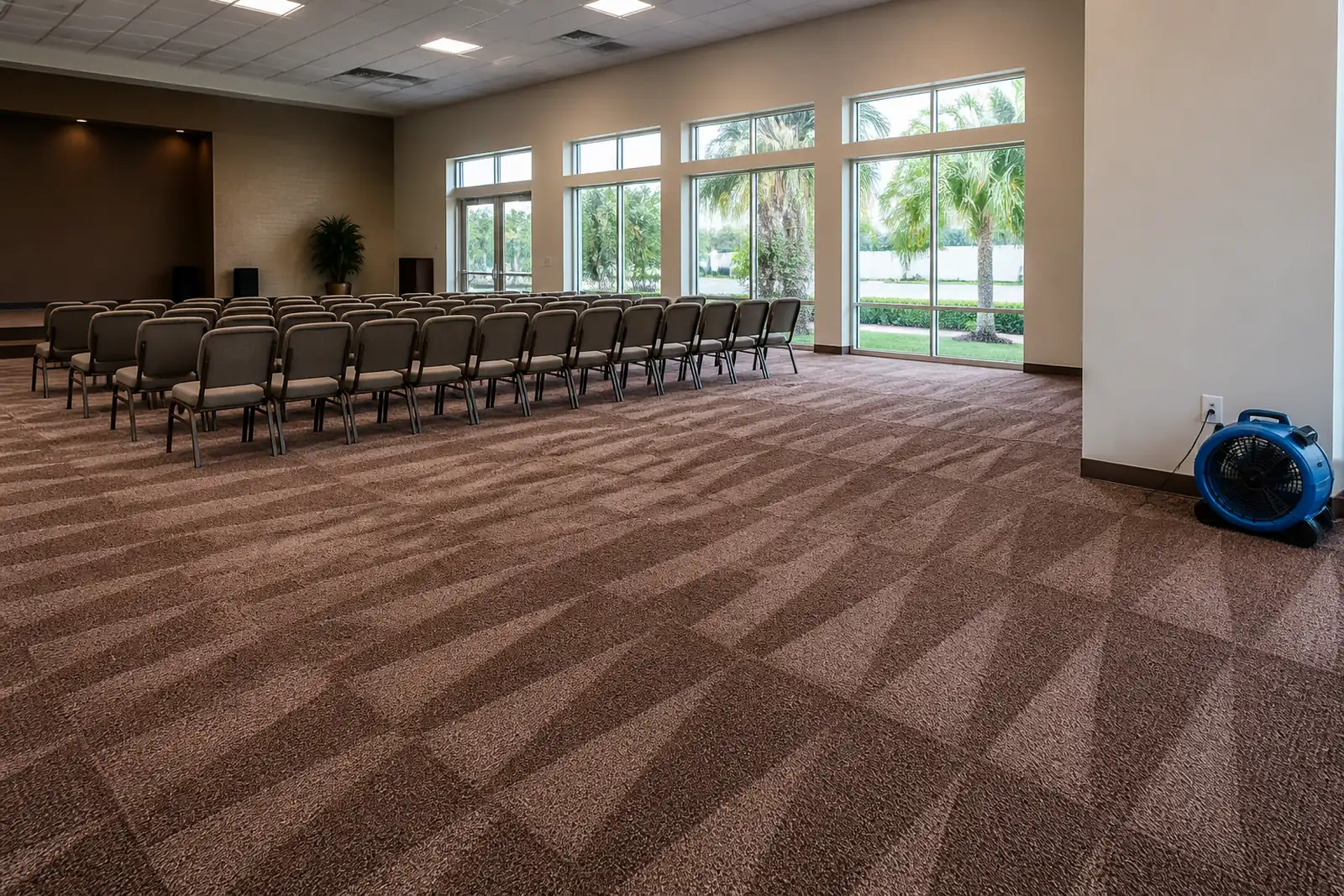
Sanctuary aisles, the foyer and fellowship halls take most of the traffic, and weekend services and midweek events limit access. Many churches schedule extraction early in the week, after Sunday services, so the carpet has time to dry before the next gathering.
Schools
Classrooms, libraries, front offices and carpeted hallways are usually easiest to clean during breaks, when rooms are empty, and winter break is a common window. If you are also planning hard-floor work, our guide to scheduling floor strip and wax before the holidays follows the same calendar.
Offices and dealerships
Office lobbies, conference rooms and open work areas can often be cleaned after hours or on weekends. At dealerships, carpeted sales offices and customer lounges see steady traffic all week, so they may need a schedule of their own.
Building carpet care into your cleaning plan
The most useful carpet schedule is one that is written into your plan, not handled as a last-minute call. Points to settle with your provider:
- Which rooms are high, medium and light traffic
- Vacuuming frequency as part of the recurring scope (see our commercial cleaning checklist)
- How often each area gets extraction, and when, around your services, classes or business hours
- How spots are reported and treated between visits
At Empire, our in-house staff (we do not subcontract) work as a fixed crew assigned to each client, and our service checklists live in the Connecteam app. Carpet tasks and periodic extraction can be built into those checklists, depending on the package you contract alongside our recurring commercial cleaning. We are insured, and when a recurring client raises an issue, we resolve it. We serve facilities across Central Florida, including Winter Park, Apopka and Clermont.
Frequently asked questions
- How often should commercial carpet be deep cleaned?
- It depends on traffic. As a general starting point, high-traffic offices often plan a professional deep clean every 6 to 12 months, with spot treatment in between. Entrances and main hallways may need it more often, and light-traffic rooms less often. We look at your carpet and traffic during a free site visit before suggesting a schedule.
- Is vacuuming enough for office carpet?
- Vacuuming is the foundation of carpet care because it removes loose, dry soil before it is ground into the pile. It does not remove embedded soil, residue or traffic lanes, which is what periodic deep cleaning with hot-water extraction is for.
- What is hot water extraction carpet cleaning?
- It is a deep-cleaning method in which the carpet is pre-treated to loosen soil and spots, then hot water is used to rinse the fibers and the loosened soil is extracted. Empire follows it with traffic-lane and spot treatment, deodorizing, and grooming with airflow to help the carpet dry.
- How long does commercial carpet take to dry after cleaning?
- Drying time varies with the carpet material, the cleaning required, ventilation and conditions inside the building. Drier weather generally helps, but we do not promise a fixed time. We discuss the expected drying conditions and access requirements before the work begins.
- Can old traffic lanes and stains be completely removed?
- Not always. Results depend on the stain, the fiber, the carpet's condition and how long the soil or stain has been there. Some set-in stains and long-standing lanes may only lighten, which is why regular extraction before wear sets in works better than waiting. We explain what to expect during the site visit.
Related services
Let’s discuss your commercial cleaning needs
Tell us about your facility and cleaning needs. We'll contact you to arrange a complimentary on-site visit before preparing your quote.